Background
Landmines and explosive remnants of war (ERW) are a major threat to the safety and well-being of communities in conflict-affected areas and even in areas that have since been independent. They can cause serious injuries, disabilities, and deaths, and can also have long-term social and economic impacts. Despite efforts to clear landmines and ERW, victims continue to suffer from their effects, and their needs are often not adequately addressed. The lack of reliable data on the number, types, and characteristics of landmine and ERW victims, as well as their socio-economic and health impacts, hinders the development of effective interventions to address their needs.
The landmine Victims menace dates back to the war of liberation between 1976 and 1979 when the Rhodesian Army laid minefields along Rhodesia’s (now Zimbabwe) northern border with Zambia and along its south eastern border with Mozambique. This was a ploy and deliberate move by the Rhodesian Forces to deter Zimbabweans who wanted to go for military training in Zambia and Mozambique for the liberation struggle and those who had received training from crossing back into the country. The problem of mine victims has also been exacerbated by explosive remnants of war (ERW) left scattered across the country by both liberation forces and the then government forces during cease fire in 1979.
The initial contamination of landmines in Zimbabwe covered an area of 310.65km translating into a linear distance of around 850km with approximately three million mines laid. The mines laid were below and above surface. The mined areas include 220km (88 km2) Victoria Falls to Mlibizi Minefield, 426 km (28 km) Musengezi to Rwenya River, 54km (8,2km2) Sheba Forest to Leacon Hill 4.1km (0.636km2) Burma Valley, 71.77km (8.7km2) Rusitu to Muzite Mission, 53km (40.8 km) Double stretch, Sango Border Post to Crooks Corner, (1.5km) 0,56 km2 Lisulu Minefield inland minefield in Matebeleland North Province, and (1.5km) 0,450m2 Kariba Power Station Minefield. Below is a map showing Zimbabwe’s minefield coverage
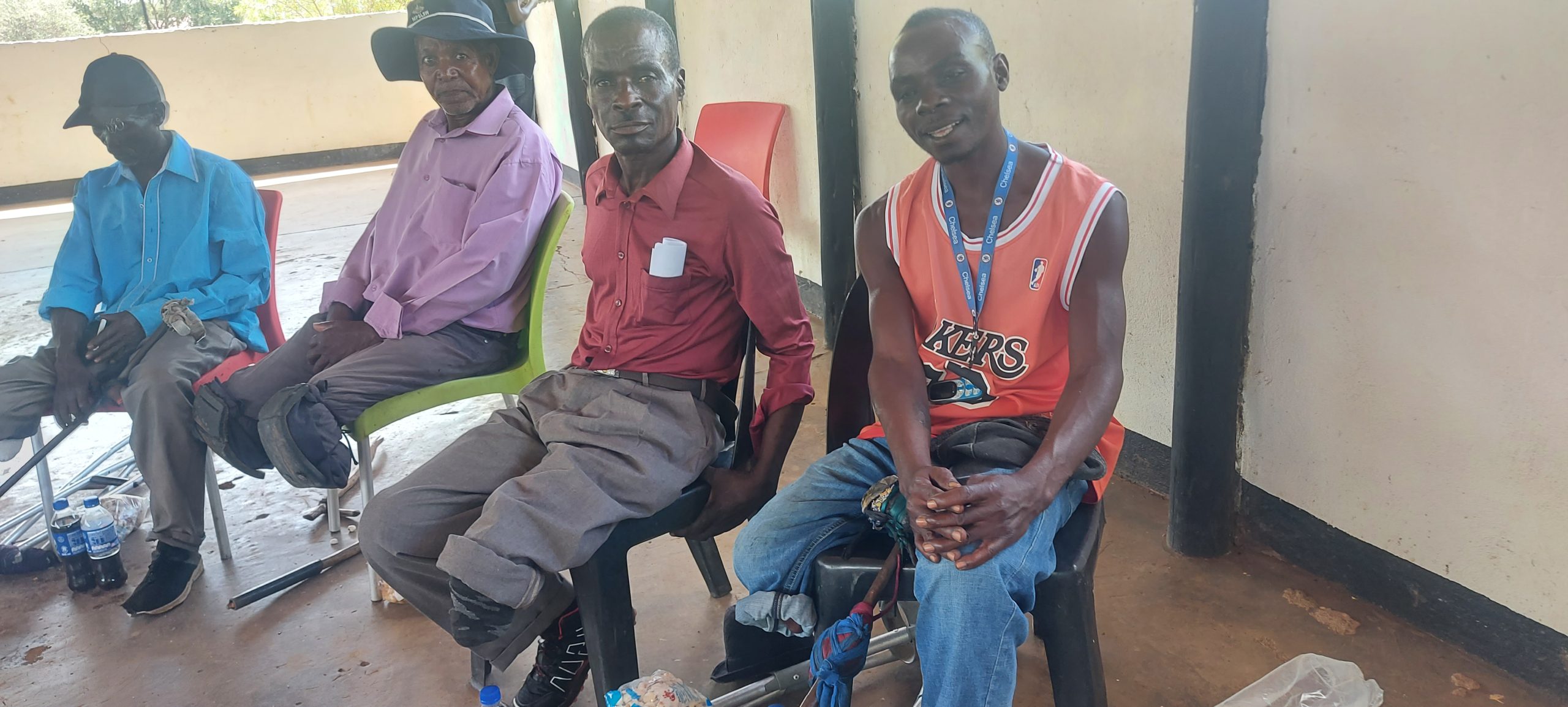
The mostly affected people are primarily located in rural areas, inhabited by poor subsistence communities whose livelihoods depend on farming and livestock rearing. The menace left a trail of destruction and is continuing to kill and maim both human beings and animals both domestic and wild. People with disabilities are especially vulnerable to discrimination, marginalization, violence, abuse, exploitation and neglect, requiring pro-active preventative attention through protection services.
Further, explosive remnants of war (ERW) pose significant dangers to people and communities, even its 43 years since the end of the liberation struggle. ERW can include unexploded ordnance (UXO), abandoned explosive ordnance (AXO), and other explosive devices that remain in the environment and may be triggered accidentally or deliberately. In Zimbabwe ERWs were left scattered all over the country and still remain a threat to communities. The dangers of ERW include:
- Physical harm: ERW can cause serious injuries, disabilities, and deaths. Children are particularly vulnerable to ERW accidents, as they may mistake the devices for toys or play with them out of curiosity.
- Psychosocial impact: ERW accidents can have long-lasting psychological effects on individuals and communities, including trauma, fear, and anxiety.
- Social and economic impact: ERW can disrupt social and economic activities, such as agriculture, trade, and tourism, and can lead to displacement and loss of livelihoods.
- Environmental impact: ERW can contaminate land and water resources, making them unusable for years or even decades. This can have detrimental effects on ecosystems and biodiversity.
Due to the delayed clearance in Zimbabwe, ERW have remained in the environment for decades since the end of the liberation struggle, posing a constant threat to communities. Therefore, to address the dangers of ERW, it is essential for MVAZ to provide education and awareness-raising to communities about the risks associated with ERW. Additionally, assistance and support should be made available to ERW victims and their families, including medical care, rehabilitation, and socio-economic support.
To better understand the scope and nature of the problem and to inform effective interventions, a baseline survey is underway.
Victims: Persons who have been killed or suffered physical or psychological injury, economic loss, social marginalization or substantial impairment